
The Bell Canada data breach shows how much damage a cyberattack can do without taking a network offline. On November 17, 2026, an intruder accessed internal Bell systems. Bell said it contained the intrusion and that this incident did not interrupt customer services. Bell confirmed that the intruder stole some business data. Later notices also described possible exposure of some consumer account information.
What the Bell Canada data breach exposed
In its November 20 statement to BleepingComputer, Bell confirmed theft of some enterprise customer data. One affected system handled orders and provisioning for business telecom circuits. A customer notice cited by the outlet listed business contacts, support ticket titles and some IP addresses among the potentially exposed data. That notice said the affected dataset did not contain credentials or file attachments.
On November 23, The Canadian Press reported on Bell’s consumer notice. Virgin Plus and Lucky Mobile published their own notices for the November 17 incident. The notices list possible exposure of contact and account details, including the date and amount of a recent payment. They say credit card and bank account information did not form part of the exposure. Bell also said it contacted the RCMP’s cybercrime unit.
What other Canadian incidents reveal
On November 18, KPMG Canada told Reuters that a third party gained access to some clients’ tax documents. Separately, Staples Canada notified print-site customers about unauthorized access in early November. The company listed order summaries and contact details among the data involved.
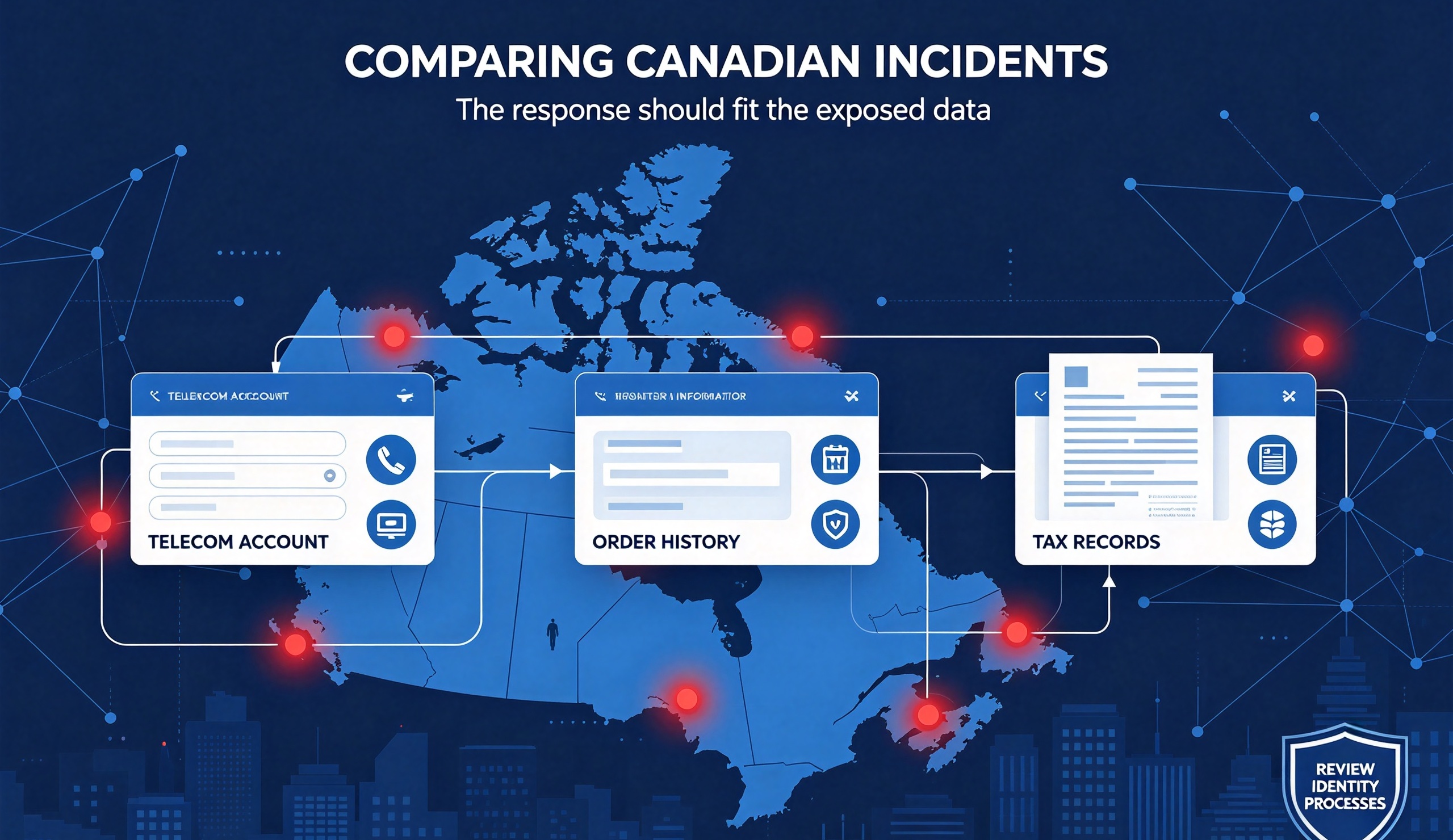
Public disclosures do not establish a link between these incidents. The useful comparison is what each system held. A telecom account can reveal which services a customer uses. An order history can make a fake delivery or refund notice sound credible. Tax records can carry more sensitive information. The follow-up should match the data that each incident exposed.
Did AI play a role?
Bell described the intruder as an ‘agentic’ threat actor. Its public comments did not show which tools the intruder used or what role AI played. The Canadian Centre for Cyber Security has warned that AI agents can speed up and coordinate multiple stages of an intrusion. That warning makes faster response a priority. It does not establish how anyone breached Bell.
What customers and security teams can do
Customers: Check breach alerts, refunds and account changes through the provider’s app or a number you already trust. Avoid links in unexpected messages. Never share a PIN or one-time code with an unsolicited caller. A caller who knows your last payment amount has not proved who they are. Canada’s Get Cyber Safe phishing guide offers more ways to spot suspicious requests.
Security teams: Find out where production customer data also appears in testing, provisioning or support systems. Remove copies that teams no longer need and mask records in test environments. Set alerts for unexpected bulk reads or exports. Require an independent callback for sensitive support requests and billing changes. If your provider shares indicators privately, compare them against your logs and follow the provider’s handling instructions.
Containment stops the intrusion. It does not remove the details someone already took. After a breach, review which account and support processes still treat those details as proof of identity.